Application of Artificial Intelligence and its Detrimental Effect on the Environment
Sudhanand Prasad Lal, Anamika Kumari , Sangeeta Deo and Biswajit Mallick
Volume-2, Issue-1, Jan.-Dec., 2025 2(1): 87-91(2025)
 Download Pdf
ABSTRACT
Artificial Intelligence (AIS) is one of the most powerful technologies of today, helping to improve innovation, fficiency, and growth in many fields. However, its rapid development has also created serious environmental problems. This study, based on secondary data, explores how AI contributes to environmental damage. Information was collected from reliable sources such as academic journals, reports, and publications from UNEP, UNRIC, SFA (Oxford), and The Guardian.
The results show that AI systems use large amounts of energy, release more carbon emissions, consume excessive water, and depend heavily on mining for important minerals like cobalt, lithium, and rare earth elements. The backbone of AI is data centres, which are major water guzzlers, requiring vast quantities of water for cooling and adding to environmental stress. These activities lead to deforestation, soil damage, and loss of biodiversity.
The study suggests using renewable energy, developing energy-saving AI models, practicing responsible mining, recycling electronic waste, and building eco-friendly data centres. Overall, it highlights the importance of making AI development sustainable and in line with the Sustainable Development Goals (SDGs) to protect the environment for the future.
Keywords: Artificial Intelligence, Electronic Waste (E-Waste), Green Technology, High Energy Consumption, Resource Extraction, Sustainable Development Goals (SDGs), and Water Usage.
INTRODUCTION
The concept of Artificial Intelligence (AI) was introduced by John McCarthy in 1956 at a conference dedicated to the subject. However, the idea that machines could imitate human thought and behaviour was proposed earlier by Alan Turing, who created the Turing Test to distinguish between human and machine intelligence (Mintz & Brodie 2019). Today, AI uses everywhere in advanced technologies that allow computers and machines to perform advanced functions, making them capable of Analyzing data, understanding language, recognizing images, and generating recommendations. These functions require abilities that are typically associated with human intelligence, such as perceiving the environment, learning from experience, making informed decisions, and solving problems (Russell & Norvig 2016). It is essential to understand the interconnected nature of the Sustainable Development Goals (SDGs) and the collective efforts required to achieve them. The United Nations emphasizes that all goals must be addressed to ensure that no one is excluded. However, progress in one SDG can sometimes have unintended negative consequences on another. Recognizing these linkages is vital when applying AI for social good, as the goal should be to create the greatest overall positive impact while avoiding harm to other targets (Lal et al., 2023). To achieve this, experts in various fields and AI researchers are encouraged to evaluate both the benefits and drawbacks of their AI applications in relation to the five pillars of sustainable development—people, planet, prosperity, peace, and partnerships—which form the foundation of the global agenda (Tomašev et al., 2020).
MATERIALS AND METHODS
This research employs a secondary data approach to investigate the adverse environmental impacts associated with Artificial Intelligence (AI) (Srivastava et al., 2021). Both qualitative and quantitative data were gathered from credible and scholarly sources, including academic journals, research articles, government publications, institutional reports, and documents from international organizations such as the United Nations Environment Programme (UNEP), United Nations Regional Information Centre (UNRIC), Strategic Metals and Critical Minerals Analysis SFA (Oxford), and The Guardian. Relevant statistical records, case studies, and international reports were analysed to assess the environmental impacts of AI technologies, with particular emphasis on energy use, carbon output, water consumption, resource extraction, and the production of electronic waste. The research further explored policy initiatives, mitigation approaches, and expert suggestions aimed at fostering sustainable AI practices to reduce environmental damage and advance global sustainability goal.
Different Types of Artificial Intelligence
Based on their functions and capabilities, Artificial Intelligence can generally be divided into two main types. The first is Weak AI, also known as Narrow AI, which is designed to carry out specific tasks such as facial recognition, voice assistants like Siri, or operating self-driving cars. Most of the AI systems we see today belong to this category, as they are developed to perform a limited, welldefined function. While Narrow AI is useful in everyday life, some experts warn that it could also pose risks—for example, a malfunction might disrupt power grids or cause serious damage in sensitive areas like nuclear plants
The second type is Strong AI,often referred to as Artificial General Intelligence (AGI), which represents a more advanced form of intelligence that researchers aim to develop in the future. Unlike Narrow AI, AGI would have the ability to understand, learn, and perform any intellectual task that a human can, potentially even surpassing human abilities in many areas. While current Narrow AI systems can excel in specific tasks such as playing chess or solving equations, AGI would be capable of handling a wide range of complex problems across different domains. Strong AI is often imagined as a machine with human-like cognitive abilities, including reasoning, perception, beliefs, and decision-making, making it far closer to true human intelligence (Tai, 2020).
Positive Applications of AI for the Environment
The fast growth and effectiveness of Artificial Intelligence (AI) technologies have led to their widespread use across multiple sectors and areas of research. In recent years, the field of environmental studies has shown remarkable interest in applying AI to address its challenges. This review explores the most recent uses of AI within environmental disciplines, emphasizing the opportunities it offers while also examining both its benefits and limitations (Konya & Nematzadeh 2024).
Artificial Intelligence (AI) has brought many positive changes to human life by making everyday tasks easier and improving overall wellbeing. In healthcare, AI assists doctors in diagnosing diseases more accurately, detecting illnesses at an early stage, and even guiding complex surgeries. Education has also become more inclusive and accessible through AI-powered learning platforms and virtual tutors that adapt to individual needs. In daily life, smart assistants, chatbots, and home devices save time and provide convenience, while in transportation, AI helps manage traffic and supports the development of self-driving vehicles to improve road safety. Farmers benefit from AI tools that predict weather, monitor crops, and enhance food production through precision farming. Additionally, AI plays a crucial role in disaster management by predicting floods, storms, and earthquakes, giving people more time to prepare. It also creates opportunities for people with disabilities through assistive technologies such as speech recognition and text-to-speech tools, making life more inclusive. Overall, AI has become a powerful tool that supports health, safety, efficiency, and accessibility in human society.
Negative impact in the environment
With the rapid advancement of Artificial Intelligence (AI), questions have emerged about the future role of humans in society. Some wonder whether humans may become increasingly dependent on machines, potentially losing their industriousness and reverting, over time, to a more primitive state. While evolution occurs over millennia and such changes might not be immediately noticeable, there is also concern about AI becoming so powerful that it can operate independently, ignoring human commands and potentially taking control.
High Energy consumption
AI consumes huge amounts of energy, especially during the training of large models that run for days on powerful computers. This raises electricity demand, increases carbon emissions when powered by fossil fuels, and adds pressure on data centres already using 1–5% of global electricity. Sustainable solutions are needed to reduce this impact (IEA, 2025).
Table 1: Environmental Impacts of Artificial Intelligence and Their Key Characteristics.
| Environmental Aspect | Description | Examples / Evidence | Consequences | Sustainable Mitigation Measures |
|---|---|---|---|---|
| 1. Resource Extraction | Extraction of critical minerals like lithium, cobalt, and rare earth elements used in AI hardware and semiconductors. | Mining of cobalt and rare earths in developing countries; increased demand for silicon and gold. | Deforestation, soil erosion, water contamination, and biodiversity loss. | Promote recycling of e-waste, use alternative materials, and adopt responsible mining policies. |
| 2. High Energy Consumption | AI model training and data centre operations require massive electricity input. | Training GPT-4-sized models consuming megawatt-hours of energy daily. | Strain on power grids, high operational costs, and energy inefficiency. | Shift to renewable energy, energy-efficient chips, and optimized AI algorithms. |
| 3. Water Usage | Cooling systems in data centres consume significant water to prevent overheating. | Estimated to use up to six times Denmark’s annual water use by 2027 (UNEP, 2025). | Water scarcity, competition with agriculture and local communities. | Use of air-cooled systems, recycled water, and location-based water management. |
| 4. Increased Carbon Emissions | Energy from fossil fuels for AI infrastructure increases GHG emissions. | Google’s carbon emissions rose by nearly 50% from 2019–2023 due to AI expansion (Milmo, 2024). | Global warming, air pollution, and climate change acceleration. | Transition to carbon-neutral data centers, AI energy audits, and carbon offset programs. |
| 5. Electronic Waste (E-Waste) | Rapid hardware obsolescence and disposal of outdated AI components. | Discarded chips, servers, and batteries from outdated systems. | Toxic pollution, land degradation, and public health risks. | Implement circular economy, e-waste recycling, and product life-cycle management. |
Increased Carbon Emissions
The growth of artificial intelligence (AI) has led to a rise in carbon emissions, largely because data centres depend heavily on electricity produced from fossil fuels. This reliance contributes significantly to greenhouse gas emissions, as seen in Google’s output, which climbed by almost 50% between 2019 and 2023 to meet increasing AI demands (The Guardian, 2024). Globally, it is estimated that AI-powered data centres could be responsible for up to 10% of the projected increase in electricity consumption by 2035, underscoring the notable environmental consequences of expanding AI infrastructure (Milmo, 2024).
Water Usage
To keep servers from overheating, data centres rely heavily on water for cooling, which has sparked worries about water shortages in certain areas (Institute of Energy and the Environment). Estimates suggest that by 2027, AI infrastructure could use up to six times the amount of water consumed by Denmark, intensifying the strain on regions already struggling with scarce water resources (UNEP, 2024). In a case study Uruguay Data centre, which are frequently seen as the foundation of artificial intelligence (AI), require enormous amounts of computer power, which produces a lot of heat and necessitates a large amount of water for cooling. There are significant worries about water scarcity in the surrounding towns after it was revealed that one company intended to use over 8.75 million Liters of water per/day, which is enough to cover the daily needs of around 22,000 people. By 2030, data centres are expected to use twice as much water globally, highlighting the growing environmental impact of AI infrastructure. In order to mitigate the environmental impact of AI-driven operations, environmental experts recommend situating data centres in cooler countries, like Sweden, where natural temperatures can help minimize energy and water usage.
Electronic Waste (E-Waste)
Producing AI hardware relies greatly on rare earth elements and various minerals that are frequently mined through environmentally harmful methods. Such extraction processes contribute to deforestation, soil erosion, and contamination of water sources, resulting in the destruction of ecosystems and a considerable decline in biodiversity in the impacted areas.
Resource Extraction
Semiconductors & Microelectronics
Essential minerals form the backbone of modern computing and play a critical role in the development of artificial intelligence (AI). Silicon and rare earth elements provide the speed, efficiency, and performance necessary for advanced AI chips and high-speed devices. Boron is used to modify silicon’s electrical properties, enabling the creation of p-type semiconductors that regulate current flow in transistors. Silicon itself serves as the ultra-pure base material for microchips, supporting sophisticated computing and AI technologies. Cobalt contributes to semiconductor manufacturing by forming strong interconnects and resisting electromigration, ensuring durability in advanced devices. Copper is vital for fast and efficient signal transmission within microchips, enhancing both performance and energy efficiency. Silver, with its superior conductivity, is crucial for high-frequency and precision electronics, facilitating rapid signal transfer and maintaining energy efficiency. Gold, valued for its excellent conductivity and corrosion resistance, ensures reliable connections and stable performance across electronic components
Data Storage (HDDs, SSDs, Memory Chips)
With the rapid growth of data from AI, cloud computing, and connected devices, critical minerals have become essential for high-speed, reliable digital storage. They are key components of hard drives, solid-state drives, and memory chips, supporting infrastructure that powers AI models, consumer electronics, and advanced defence systems (Letizi, 2025).
Lithium powers batteries for storage devices and ensures uninterrupted data centre operation, while silicon forms the core of SSDs and memory chips for scalable, high-density digital storage. Samarium-cobalt (SmCo) magnets, valued for their thermal stability, are used in critical and defence storage systems to maintain magnetic strength under extreme temperatures.
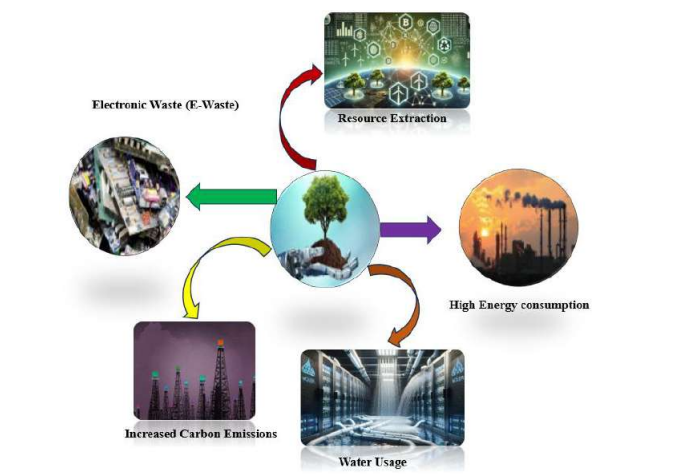
Fig. 1. Environmental Impacts of Artificial Intelligence.
CONCLUSIONS
Artificial Intelligence (AI) has transformed modern life, boosting innovation and efficiency, but its growth has significant environmental costs. The study shows that AI contributes to high energy use, carbon emissions, water consumption, mineral extraction, and electronic waste, leading to ecological harm. To prevent further damage, sustainability must be integrated into AI development through renewable energy adoption, efficient algorithms, responsible mining, recycling, and green data centres. Ultimately, aligning AI with environmental sustainability and the Sustainable Development Goals (SDGs) is vital to ensure that technological progress supports a greener and more resilient future.
FUTURE SCOPE
Artificial Intelligence (AI) has changed the way we live by improving creativity and making work more efficient. However, its fast growth also harms the environment. Studies show that AI uses a lot of energy, produces high carbon emissions, consumes large amounts of water, and depends on heavy mining for minerals, which all cause environmental damage. To reduce these problems, AI development should include sustainable methods such as using renewable energy, designing energy-saving algorithms, practicing responsible mining, recycling materials, and building green data centres. In the end, connecting AI progress with environmental care and the Sustainable Development Goals (SDGs) is important for creating a cleaner and stronger planet
Acknowledgement.
The author gratefully acknowledges the United Nations Environment Programme (UNEP), SFA (Oxford) for providing essential data, information, and resources that greatly facilitated this study. The guidance and materials supplied by these organizations were crucial in examining the applications of artificial intelligence and assessing its environmental consequences, as well as in exploring global efforts to encourage sustainable and responsible AI practices.
Conflict of Interest.
none
REFERENCES
IEA. (2025) Energy demand from AI: Energy and AI. https://www.iea.org/reports/energyand-ai/energy-demand-from-ai
Lal, S.P., Borah, A., & Das, D. (2023). Priorities and Precautions apropos Chat GPT in Academia with especial reference to Agricultural Education. International Journal of Theoretical & Applied Sciences, 15(1), 54-59. https://www.researchtrend.net/ijtas/pdf/Priori ties-and-Precautions-apropos-Chat-GPT-inAcademia-with-especial-reference-toAgricultural-Education-Sudhanand-PrasadLal-10.pdf
Letizi, M. (2025). The impact of artificial intelligence on the environment | Experts’ Opinions. Devaid limited Development Aid. https://www.developmentaid.org/newsstream/post/193554/impact-of-ai-onenvironment?utm_source=chatgpt.com
Konya, A., & Nematzadeh, P. (2024). Recent applications of AI to environmental disciplines: A review. Science of The Total Environment, 906, 167705. https://www.sciencedirect.com/science/articl e/pii/S0048969723063325
Milmo, D. (2024, July 2). Google’s emissions climb nearly 50% in five years due to AI energy demand. The Guardian. https://www.theguardian.com/technology/article/2024/jul/02/google-aiemissions?utm_source=chatgpt.com
Mintz, Y., & Brodie, R. (2019). Introduction to artificial intelligence in medicine. Minimally Invasive Therapy & Allied Technologies, 28(2), 73-81.
Russell, S. J., & Norvig, P. (2016). Artificial Intelligence: A Modern Approach. Pearson. https://people.engr.tamu.edu/guni/csce625/s lides/AI.pdf
SFA (Oxford). (2025). Critical minerals in artificial intelligence. SFA (Oxford).from https://www.sfa-oxford.com/knowledge-andinsights/critical-minerals-in-low-carbon-andfuture-technologies/critical-minerals-inartificial-intelligence/
Srivastava, R. K. & Lal, S. P. (2021). Relational Analysis of Foodgrains and its Seed Production in India: Current Scenario and Future Prospects. Biological Forum – An International Journal, 13(2), 726-731.
Tai, M. C. T. (2020). The impact of artificial intelligence on human society and bioethics. Tzu chi medical journal, 32(4), 339-343. DOI: 10.4103/tcmj.tcmj_71_20 https://journals.lww.com/TCMJ/fulltext/2020/ 32040/The_impact_of_artificial_intelligence_ on_human.5.aspx
Tomašev, N., Cornebise, J., Hutter, F., Mohamed, S., Picciariello, A., Connelly, B., … & Clopath, C. (2020). AI for social good: unlocking the opportunity for positive impact. Nature Communications, 11(1), 2468. https://www.nature.com/articles/s41467-020- 15871-z
UNEP. (2024, September 21). AI has an environmental problem. United Nations Environment Programme. https://www.unep.org/news-andstories/story/ai-has-environmental-problemheres-what-world-can-do-about
UNEP. (2025, April 7). Artificial intelligence: United Nations Environment Programme. https://unric.org/en/artificial-intelligence-howmuch-energy-does-ai-use/
How to cite this article:
Sudhanand Prasad Lal, Anamika Kumari, Sangeeta Deo and Biswajit Mallick (2025). Application of Artificial Intelligence and its Detrimental Effect on the Environment. AgriBio Innovations, 2(1): 87-91.